Loading
Loading
Back pain is common, but when it becomes persistent or starts interfering with daily activities, it should not be ignored. A slip disc is one possible cause of back or neck pain and may also lead to symptoms such as radiating pain, stiffness, numbness or weakness in the limbs.
The spine plays an important role in supporting the body, maintaining posture and allowing movement. Maintaining proper posture, avoiding unnecessary strain and following appropriate exercises can help support overall spinal health.
Nivaran Pain Relief Centre focuses on pain management and provides care for people dealing with pain-related musculoskeletal conditions.
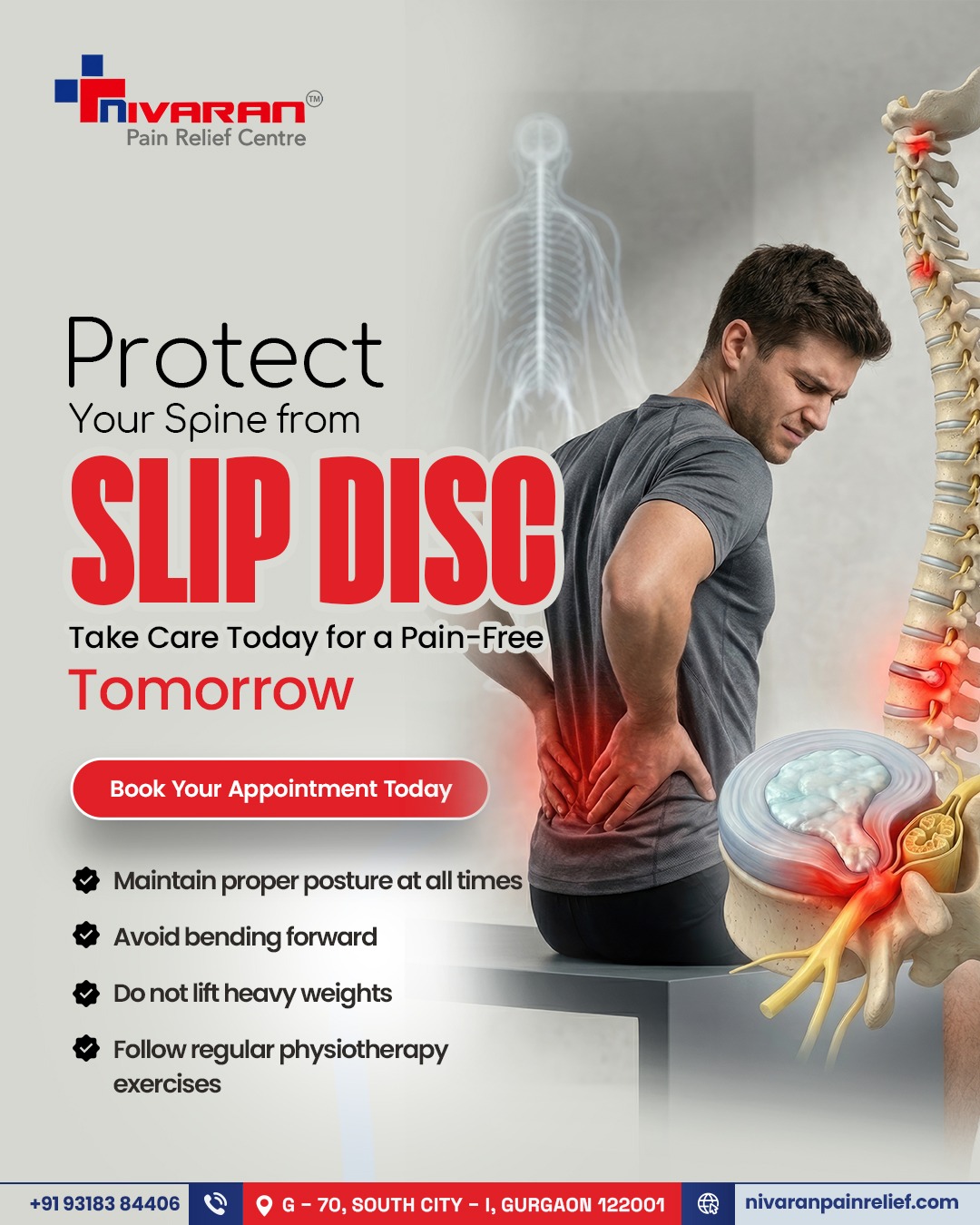
A slip disc, commonly referred to as a herniated disc, is a condition in which one of the discs between the vertebrae becomes damaged or moves out of its normal position.
The discs between the vertebrae act as cushions and help absorb stress while allowing the spine to move. When a disc becomes damaged or bulges, it may irritate or put pressure on nearby nerves.
The symptoms can vary depending on the location of the affected disc and the nerves involved.
A slip disc can develop for several reasons. In many cases, age-related changes can cause the spinal discs to become less flexible and more vulnerable to injury. Other factors may also increase the strain placed on the spine.
Some common factors include:
Back pain can have many different causes, so not every case of back pain is related to a slip disc. If the discomfort persists, it is advisable to consult a healthcare professional.
The symptoms of a slip disc can vary from person to person. Depending on the location and severity of the disc problem, a person may experience:
The location of the symptoms can provide useful information about the affected area of the spine.
If pain or numbness persists, becomes severe or is accompanied by weakness, medical evaluation is recommended.
Taking care of your spine does not always require major lifestyle changes. Simple changes to everyday habits can help reduce unnecessary strain and support better spinal health.
Poor posture while sitting, standing or working can place additional stress on the back and neck.
When working while seated, try to keep your back properly supported and avoid positions that require prolonged forward bending. Maintaining a comfortable and neutral posture can help reduce unnecessary strain.
Repeated or prolonged forward bending can place additional stress on the spine. Try to avoid maintaining such positions for long periods, particularly if you already experience back discomfort.
Lifting heavy objects can put considerable strain on the spine, particularly when the lifting technique is incorrect.
When lifting is unavoidable, use appropriate body mechanics and avoid sudden movements. For very heavy objects, seeking assistance can be a safer option.
Regular physical activity can help maintain strength, flexibility and overall physical fitness. However, people experiencing significant back pain should not begin strenuous exercises without professional guidance.
A healthcare professional or physiotherapist can recommend exercises according to the individual’s condition.
Physiotherapy may be recommended as part of the management of certain spinal conditions. Appropriate exercises can help improve mobility, flexibility and muscle strength.
However, physiotherapy exercises should be selected according to the individual’s needs. It is advisable to consult a qualified professional before starting a new exercise routine for back pain.
Back pain does not always indicate a serious problem. However, medical advice should be considered when the symptoms persist, repeatedly return or interfere with everyday activities.
You should consult a healthcare professional if:
Persistent back pain can make everyday activities more difficult and may affect mobility and quality of life.
Seeking medical attention can help identify the possible cause of the pain and determine whether further evaluation or treatment is required. Depending on the individual’s condition, a healthcare professional may recommend appropriate treatment, physiotherapy or other measures.
It is better to have persistent or unusual symptoms evaluated rather than continuing to ignore them.
A slip disc cannot always be prevented, but certain habits can help reduce unnecessary strain on the spine.
Some useful measures include:
The spine supports many of the movements we perform every day, making spinal health an important part of overall well-being.
Simple habits such as maintaining good posture, using safe lifting techniques, staying active and following appropriate exercises can help reduce unnecessary stress on the spine.
Persistent back or neck pain, numbness, weakness or radiating pain should not be ignored. Consulting a qualified healthcare professional can help determine the possible cause and appropriate course of action.
Nivaran Pain Relief Centre focuses on pain management and aims to help people manage pain and improve their quality of life.
The centre’s communication highlights important habits for supporting spinal health, including maintaining proper posture, avoiding unnecessary forward bending, being careful while lifting heavy objects and following appropriate physiotherapy exercises.
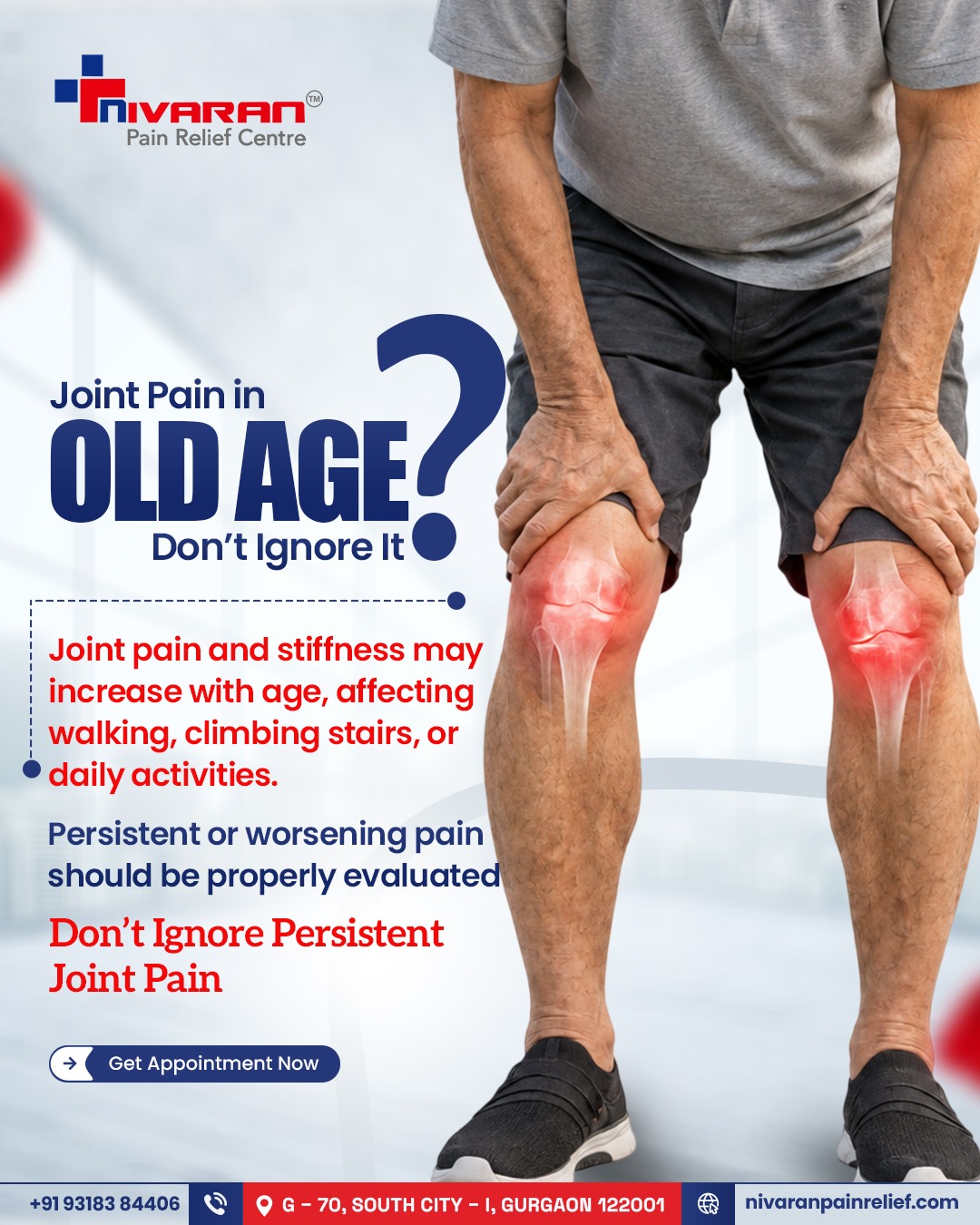
Joint stiffening and pain increase as a person ages. Persistent and worsening pains in the joint restricts normal movements and activities or even provokes pain when walking, climbing stairs, and doing other daily activities. An elderly person should seek a professional diagnostic to determine the causative agents for the discomfort, as they limit a person’s daily life. Getting to a professional medical center will help in the timely diagnosis to relieve the individual.
Keeping active despite their condition or aging is vital, and so is getting appropriate medical intervention. If the person or elderly member is experiencing some form of joint discomfort or pain, it is essential to arrange for an opportunistic screening to prevent the condition from persisting or becoming chronic. Contact us at Nivaran Pain Relief Centre to receive appropriate pain management intervention.
G-70, South City-I, Gurgaon, Haryana – 122001